Issue No. 001 - November

The Word from WESTHOLME
Stories and news from Roots, Roost & Rafter.
November is here, and things are starting to slow down around Westholme. Well, sort of. The chickens might be settling into their winter routines, but I’ve still got plenty keeping me busy!
One of the biggest things happening lately is the launch of The Breeder Registry! After spending a whole lot of time building and testing the website, it’s finally open to the public. The feedback so far has been wonderful, and breeders are already creating profiles and adding their homesteads to the directory. I’m really excited to see how it grows. I think it’s going to be an incredibly useful resource for Nova Scotia poultry keepers, especially when hatching season rolls around in the new year and everyone starts looking for their next flock additions. If you haven’t checked it out yet, you can find it at thebreederregistry.com.
Over at The Rooster Registry, things are getting a little quieter as winter sets in. “Extra” roosters tend to be a seasonal problem, so I’m expecting fewer bachelors to be looking for homes while the snow flies. That doesn’t mean the Registry is closing up shop though! It’ll be there all winter for anyone who needs to find a home for a rooster, or anyone who happens to have room for one.
In Wattlesford, my chicken village, just about everyone is molting right now. There are feathers all over, some of the chickens are looking rather naked and porcupine-y, and egg production has practically come to a standstill. I’m stockpiling the few eggs I’m getting but, eventually, I’m going to have to actually buy eggs for the first time in years. I’m not looking forward to that. 😅
Winter preparations are officially underway, too. I’ve been busy wrapping the runs in vapor barrier to keep the worst of the wind and snow out, closing up some of the vents on the prevailing wind side of the coops, and adding plenty of fresh bedding to help keep everyone comfortable. It’s definitely not my favorite time of year around here. There’s a lot of hauling bedding, wrestling with plastic, and trying to get everything finished before the weather decides I’ve taken too long. Knowing the birds will have cozy places to spend the winter makes all the work worthwhile though.
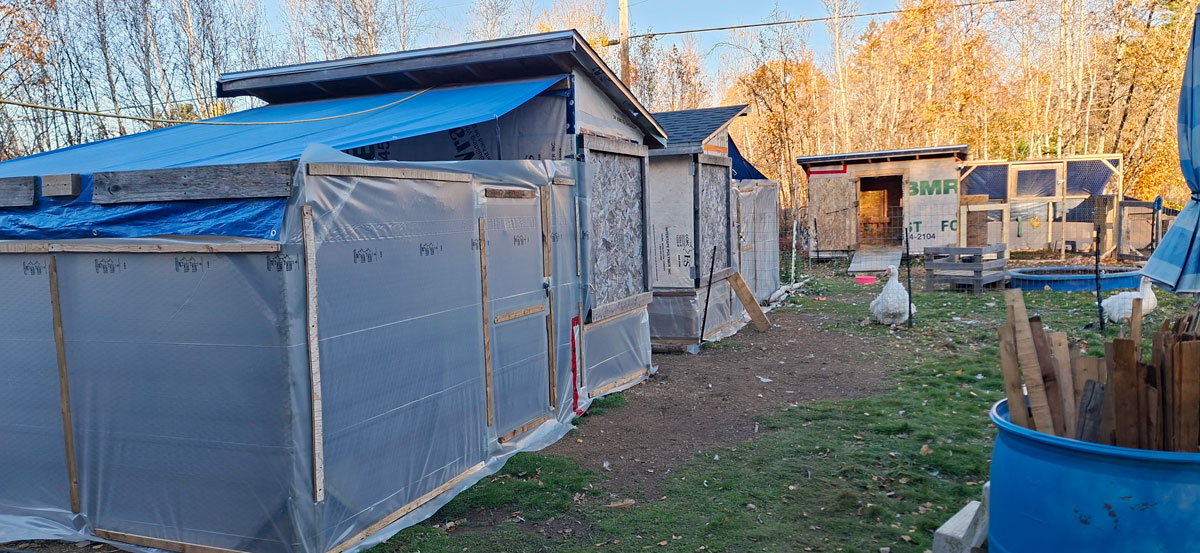
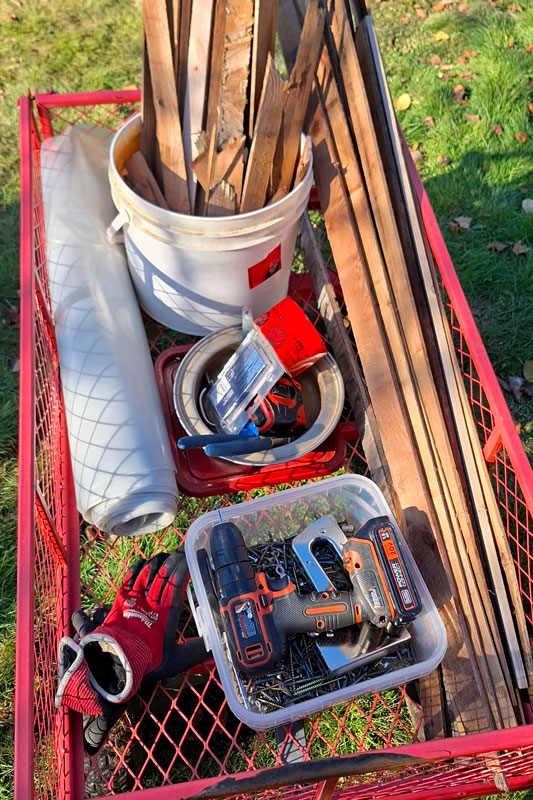
Somewhere in the middle of all that, I’ve been getting this little publication ready to go, too! I’m really looking forward to sharing more of what’s happening here at Westholme, what I’m working on behind the scenes, and what’s going on in our poultry community.
Thanks for being here for the very first issue of The Henhouse Post!

Over the Fence
Meet Lauren of Rustling Leaves Roost
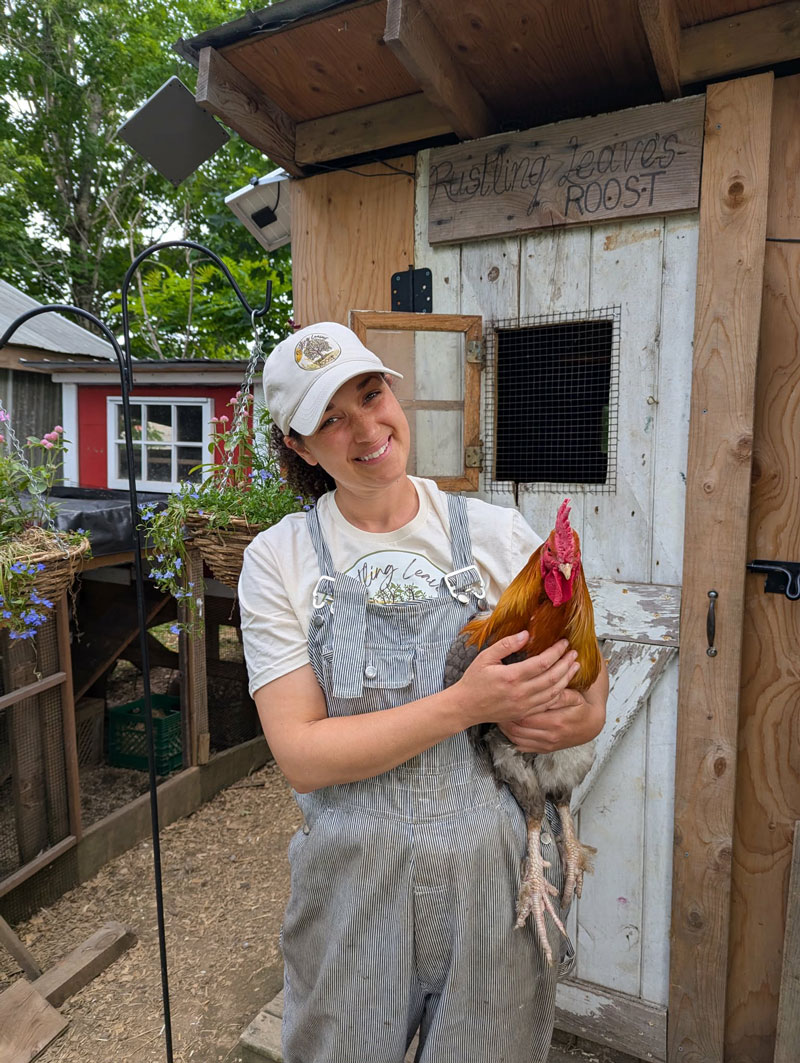
From a handful of backyard chickens to a growing collection of breeding projects, Lauren’s plans for a little flock got out of hand in the best possible way.
Lauren always knew she wanted chickens. Long before she owned a house, she was already looking forward to having a yard where she could garden, keep a few birds, and enjoy a little bit of homestead life.
When she bought her home in 2022, that dream finally had somewhere to take shape. A couple of years later, she and her partner decided it was time to get chickens.
The plan was simple: six to eight friendly backyard hens, enough eggs for themselves, and maybe an extra dozen to spare every now and then. Anyone familiar with chicken math can probably guess how that went.
After reading that buying unsexed chicks meant accounting for the possibility of roosters, Lauren started with approximately 20 chicks instead. About half turned out to be boys, and she quickly discovered that parting with them wasn’t going to be as easy as she’d imagined.
“I was just like, I love all these roosters. How do I not keep them?”
She had originally planned to keep two, but ended up keeping three for a while. Meanwhile, her growing interest in chicken breeds, feather patterns, and egg colours had her looking at what else she could add to the flock.
Before her first year of chicken keeping was over, the original plan for six to eight hens had grown into approximately 20 chickens.
And that was only the beginning.
From backyard flock to Rustling Leaves Roost
Breeding chickens wasn’t part of Lauren’s original plan.
She had deliberately chosen a variety of breeds and mixes, hoping to collect a colourful basket of eggs. As her chickens matured and started laying, she began wondering what their chicks might look like.
“It would be fun to just try and hatch them out next year and see what we get.”
Around the same time, Lauren was finding herself increasingly drawn to the idea of homesteading. She joked with me about the familiar dreams of women in their thirties: making sourdough, raising goats, and embracing a more self-sufficient lifestyle.
Naming her little homestead seemed like a fun thing to do, and Rustling Leaves Roost was born.
She created a social media page to share pictures and stories about her chickens, without any particular business ambitions. She knew a few friends who might be interested in chicks the following spring, so she thought she’d hatch some for them.
As she began thinking more seriously about her flock, she started imagining different breeding pens and the combinations of birds and egg colours they could produce.
Why not offer some chicks to other people, too?
When she advertised them on her page, she discovered there was genuine interest.
What had started as a backyard hobby was becoming something much bigger.
More than just pretty eggs
Colourful eggs were one of the things that first attracted Lauren to particular breeds, but they weren’t her only consideration.
Living in Nova Scotia, she wanted hardy birds that could handle the winters and were good at foraging. More importantly, she wanted chickens that were friendly and comfortable around people.
Her first flock included Ameraucanas, Olive Eggers, Black Copper Marans, and a Welsummer. She hoped those breeds would give her a variety of egg colours while allowing her to discover which personalities and characteristics she liked best.
As she gained experience, she began making decisions about which birds she wanted to work with more closely.
The Ameraucanas quickly became favourites, eventually leading her to explore some less common feather colours. She also found that some other breeds weren’t quite what she’d hoped for, whether because they were less social or particularly inclined to go broody.
Lauren had also originally considered dual-purpose breeds, thinking that any extra roosters could eventually help feed the family.
That plan didn’t survive actually getting to know the roosters.
“I just fell in love with them and didn’t end up being able to do that.”
As someone who has built entirely too many coops to accommodate roosters, I can relate.
The Rustling Leaves Rainbows
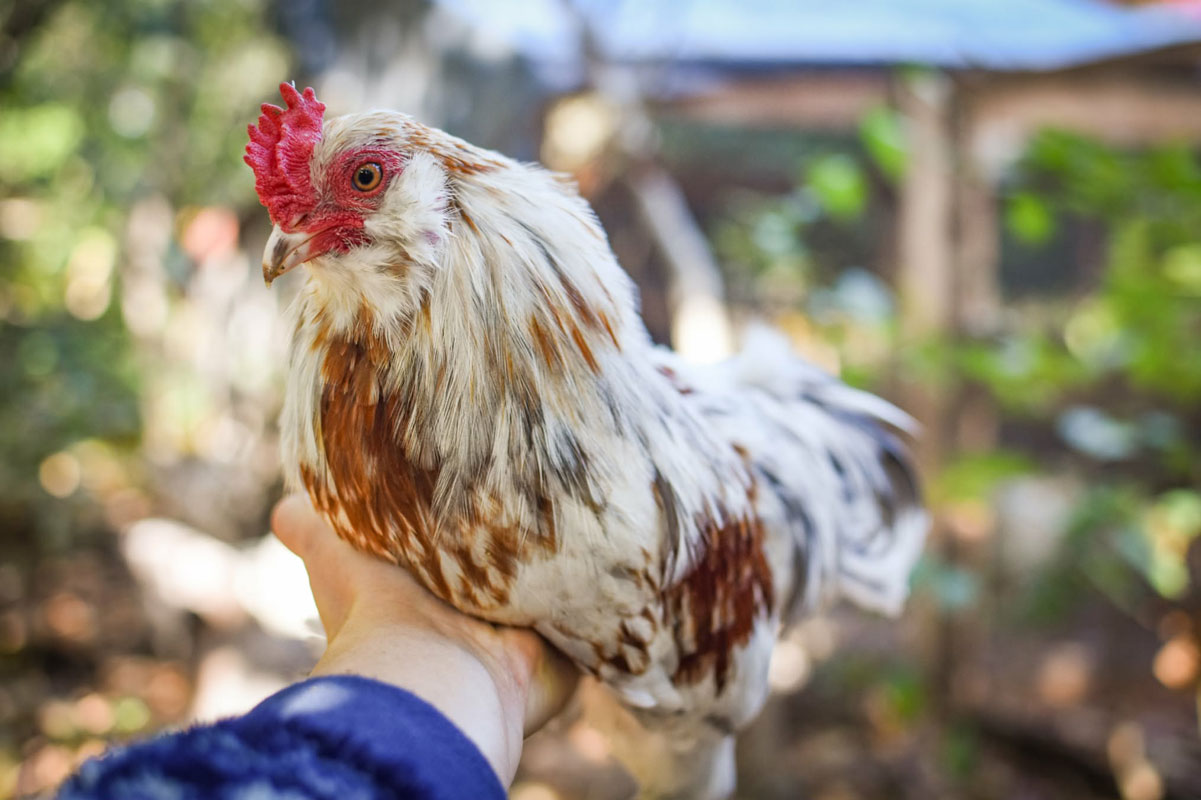
Lauren’s original mixed flock has become the foundation of one of her favourite breeding projects: the Rustling Leaves Rainbows.
The idea is to produce friendly, uniquely coloured backyard chickens that lay a variety of egg colours. They’re intended for everyday chicken keepers who aren’t necessarily looking for a particular purebred bird, but would love a flock full of interesting personalities and surprises.
This year was Lauren’s first season hatching chicks from the rainbow flock, and watching them grow has been one of the highlights.
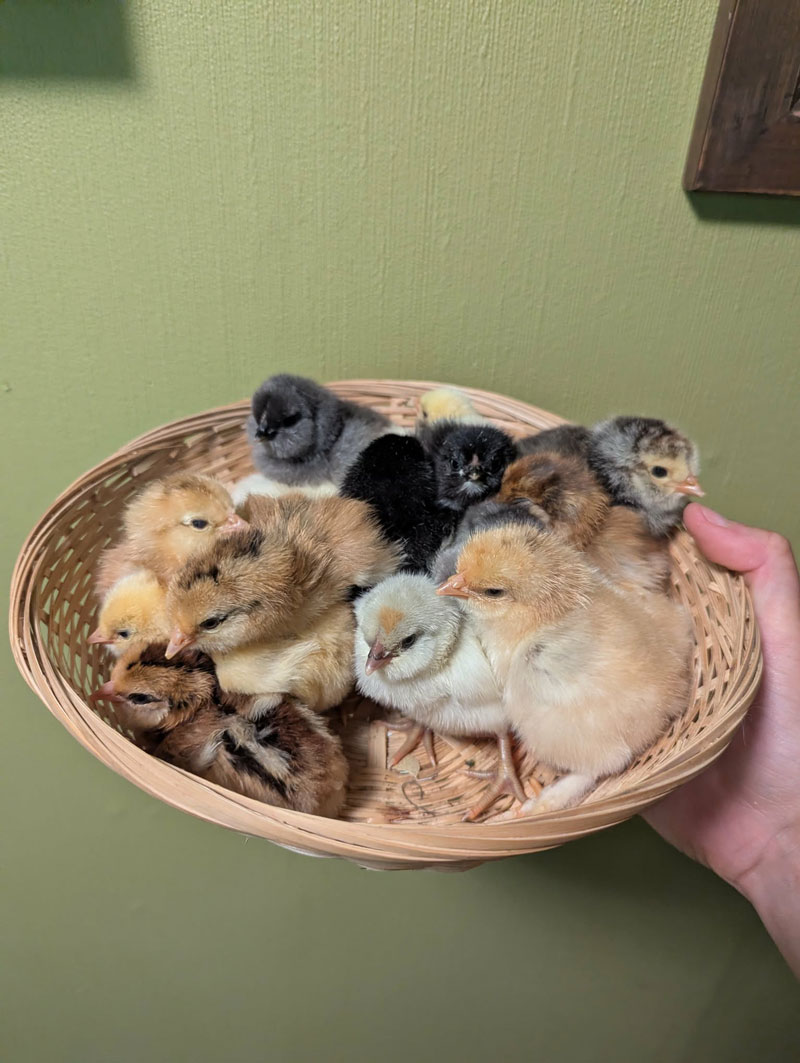
Each hatch brought something different. There were new feather patterns, unusual colours, crests, and fluffy cheeks. With so much variety, it was difficult to predict what the next chick might look like.
It was also difficult to stop hatching them.
Lauren admits she kept more than she intended, which probably won’t surprise anyone who has ever raised a particularly adorable batch of chicks.
But the biggest reward hasn’t been their appearance.
Customers have been getting in touch to tell her about the birds they brought home, and one comment keeps coming up: they’re some of the friendliest chickens they’ve ever owned.
“That makes me really happy to hear, because it’s nice to know that my friendly birds are then going on and producing friendly birds for other people.”
Now that some of those chicks are old enough to lay, Lauren is beginning to hear about their eggs, too. So far, she’s seen reports of olive, blue, and brown eggs, bringing her original idea for a colourful backyard flock full circle.
One coop was never going to be enough
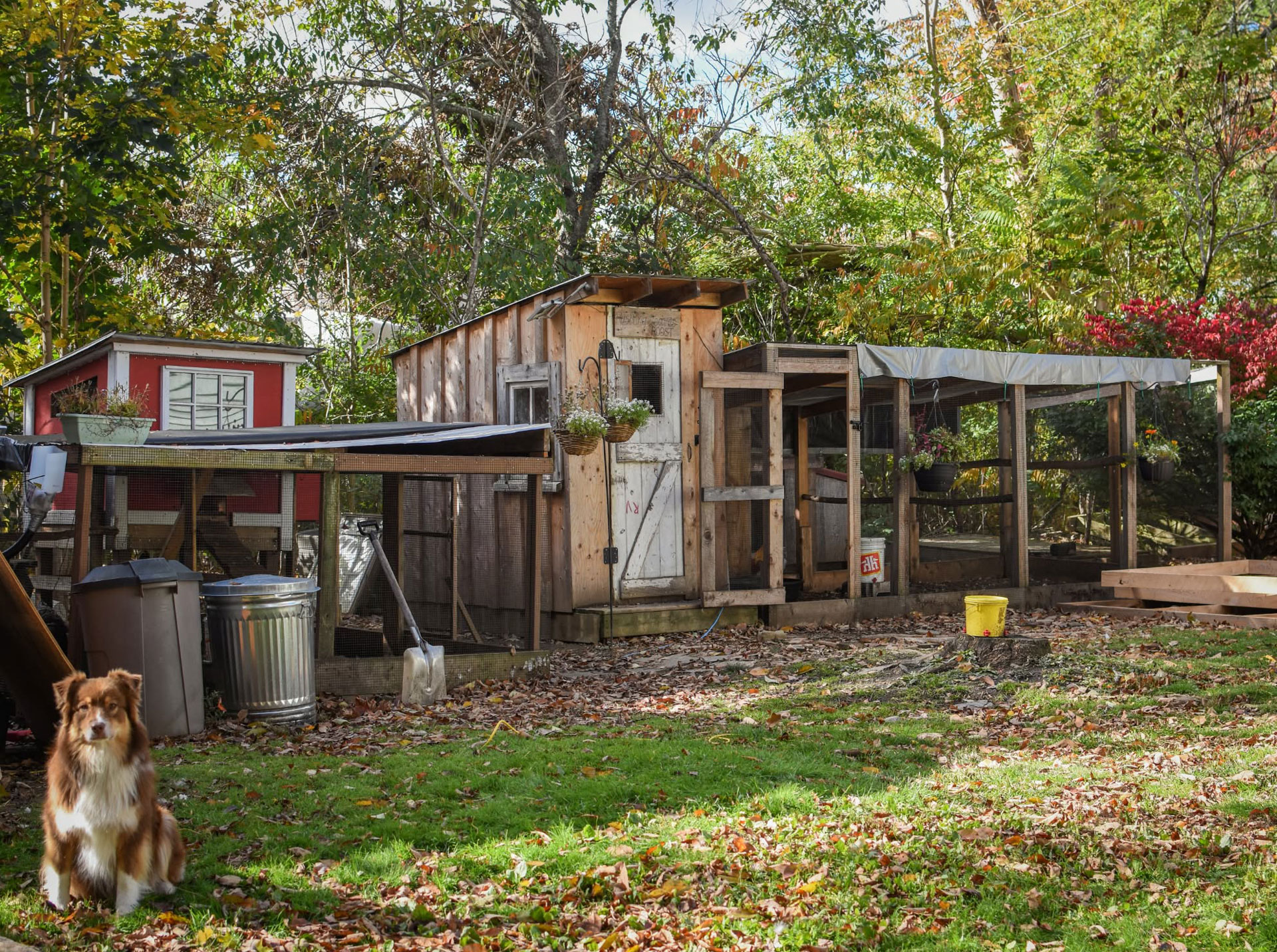
When Lauren and her partner built their first coop and run, they expected it to house their entire flock of eight chickens.
Today, that original setup is just one of several.
Her largest coop houses the Rustling Leaves Rainbows, along with some of this year’s younger birds that have joined the adults.
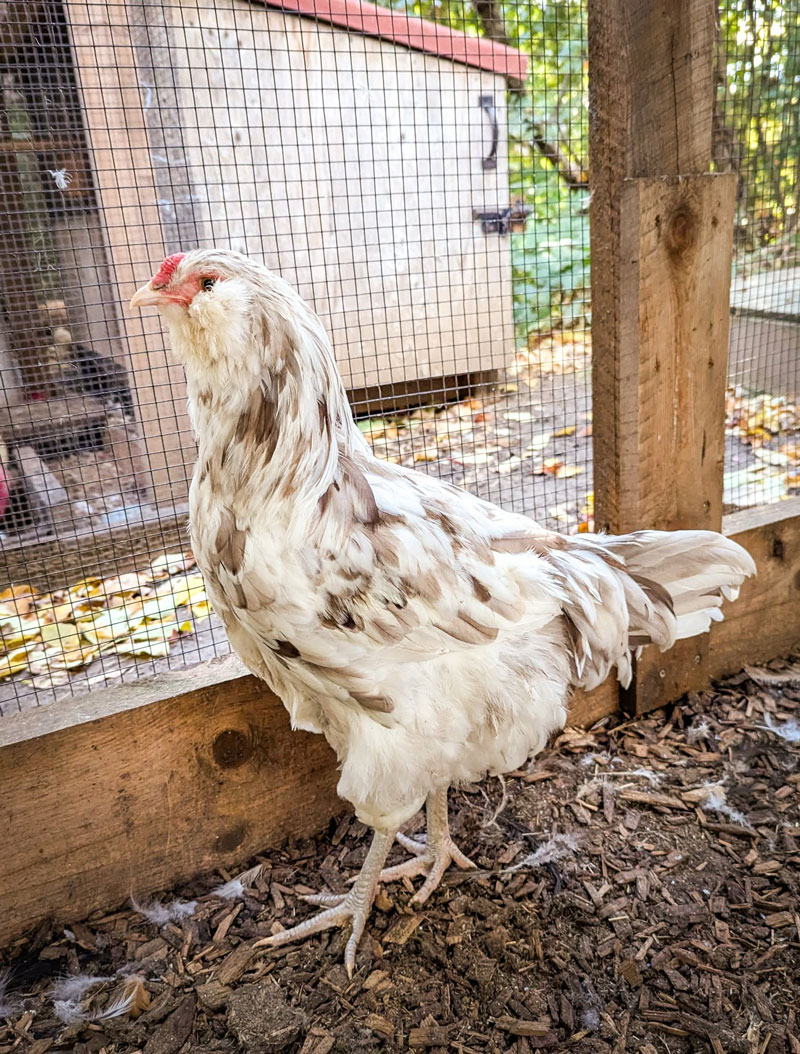
The original coop has become her Wheaten breeding pen. It’s home to a Wheaten Marans rooster, Wheaten Marans hens, Wheaten Olive Eggers, and Wheaten Ameraucanas.
The birds in that pen allow Lauren to produce several different combinations, including Marans, first-generation Olive Eggers, and backcross Olive Eggers, while maintaining the Wheaten feather colouring.
Behind those two coops is a third setup, originally put together as a grow-out space for young birds leaving the brooder.
Naturally, Lauren found another use for it.
Continue Reading in the Next Column
(Jump to top)
After picking up a couple of Bantam chicks on a whim, she decided the smaller coop might make a good permanent home for them.
“I didn’t think I’d ever have interest in Bantams,” she admitted. Now she’s trying to decide which rooster will stay with them.
There’s a Cochin she loves, but there’s also a particularly sweet little Easter Egger she’s reluctant to part with. She may end up keeping both and adding more hens.
There’s also another spare coop in the yard, currently used when a bird needs to be separated from the flock and, as if that weren’t enough, construction has started on what is supposedly the final coop.
Lauren says the new building might replace one of the existing coops. Or it might just be another addition.
“We’ll see how many coops I can fit in there before my partner puts his foot down.”
The Cadbury Crew
One of Lauren’s newest projects is already taking shape for next breeding season, and its name is every bit as fun as the idea behind it.
The Cadbury Crew is a chocolate-themed breeding project inspired by some of Lauren’s favourite birds, her Ameraucanas.
She wanted to introduce another purebred breeding option and was particularly interested in offering something a little different. After researching unusual feather colours, she found a Canadian farm with chocolate splash and mauve Ameraucanas. Those colours caught her attention, along with the different combinations they could produce.
The chocolate theme refers to the birds’ feather colours rather than their eggs, although the egg basket should be beautiful too.
Lauren is planning to develop the pen in a similar way to her Wheaten flock, with a focus on particular feather colours while producing several types of chickens.
Alongside the Ameraucanas, she plans to include a Chocolate Silver Laced Orpington hen and a Chocolate Marans hen. The goal is to produce a variety of chocolate-toned birds, including Easter Eggers and Olive Eggers, with blue, green, and olive eggs.
It’s still a developing project, but it’s one Lauren is excited to see come together.
Lessons from the first breeding season
Lauren went into her first season of selling hatching eggs and chicks without knowing quite what to expect.
She decided to experiment with taking preorders, working through her list as eggs became available and contacting customers to confirm they were still interested.
To her surprise, demand was stronger than she’d anticipated.
There were a few people who changed their minds or didn’t respond, but most followed through with their orders, and the system worked well.
The hatching itself was a learning experience. With so many different egg colours and shell thicknesses, Lauren had to experiment to find the conditions that worked best.
Overall, though, she was pleased with how the season went.
What she hadn’t necessarily anticipated was how much she’d enjoy hearing from people after their eggs or chicks had gone home. Customers sent updates about their hatches, shared pictures and stories about their growing birds, and eventually started reporting what colours of eggs their pullets were laying. For Lauren, those updates have become one of the most enjoyable parts of breeding.
Of course, the year wasn’t without its challenges.
Like many chicken keepers, she discovered that the less enjoyable parts of poultry keeping have a way of showing up whether you’re ready for them or not.
Her flock dealt with mites in one coop during the spring, along with a couple of encounters with coccidiosis. Neither was an experience she’d have chosen, but both taught her things she couldn’t have learned quite the same way from reading about them.
She’s now better prepared to recognize problems early, inspect her coops more thoroughly, and keep supplies on hand when they’re needed.
“You never really want to deal with those things, but at the same time, it’s nice to be able to get the experience with it and feel better prepared for next time.”
With one breeding season behind her, Lauren is looking forward to introducing new birds and projects, welcoming new customers, and hopefully seeing some familiar faces return next year.
She’s also been delighted to see people recommending Rustling Leaves Roost to others. For a small operation that began as a hobby, having people remember her flock and recommend her birds means a great deal.
Sometimes it’s just about the chickens
With all the breeding plans, colourful eggs, new coops, and growing interest in Rustling Leaves Roost, I wanted to know what Lauren found most rewarding about keeping chickens.
Her answer had nothing to do with breeding or selling birds.
It was simply having chickens in her backyard.
“Sitting outside and just having chickens wandering around the yard, doing chicken things, there’s something so satisfying about just watching them do that.”
It’s a feeling she wishes more people could experience.
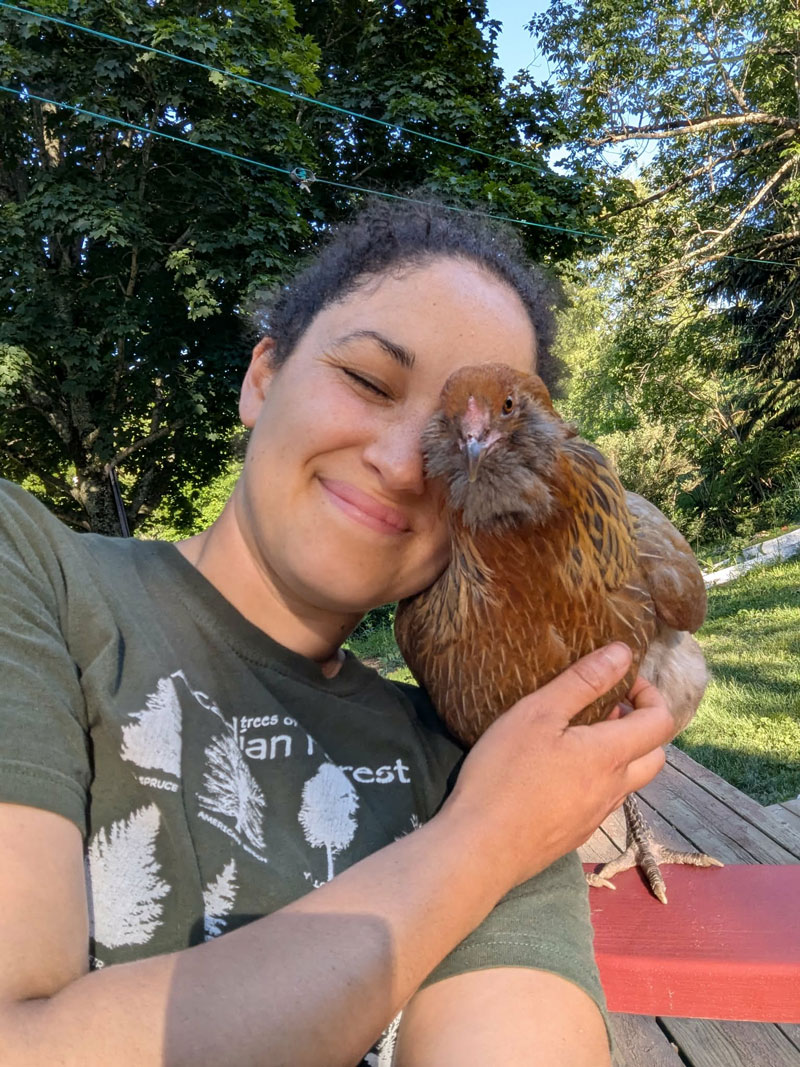
Then there’s Myrtle.
Myrtle is Lauren’s favourite hen, and one of her friendliest. A couple of times a week, when Lauren is sitting outside on the deck, Myrtle will leave the rest of the flock behind, wander over, and hop up onto her lap for a visit.
There’s something pretty special about a chicken choosing to spend time with you when she could be off doing chicken things with everyone else.
And of course, there’s the simple pleasure of collecting eggs from your own backyard.
“I literally never get tired of being able to walk out to the coop and collect a handful of pretty eggs from our own chickens! It makes me happy every single time!”
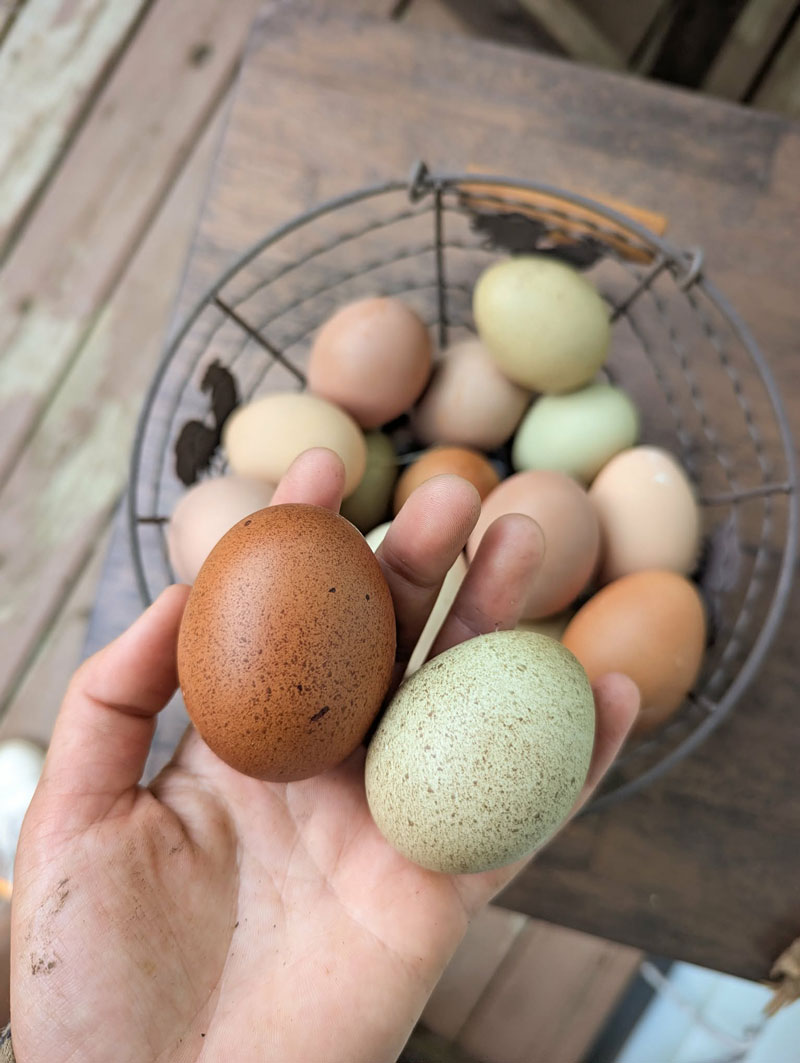
For all the changes that have happened since Lauren brought home those first chicks, the simple enjoyment of her birds is still at the heart of Rustling Leaves Roost.
The six to eight chickens she originally imagined may have multiplied into several flocks, a growing collection of coops, and some ambitious breeding projects, but she hasn’t lost sight of what made her want chickens in the first place.
And, judging by the plans she has for next year, I don’t think chicken math is quite finished with her yet.
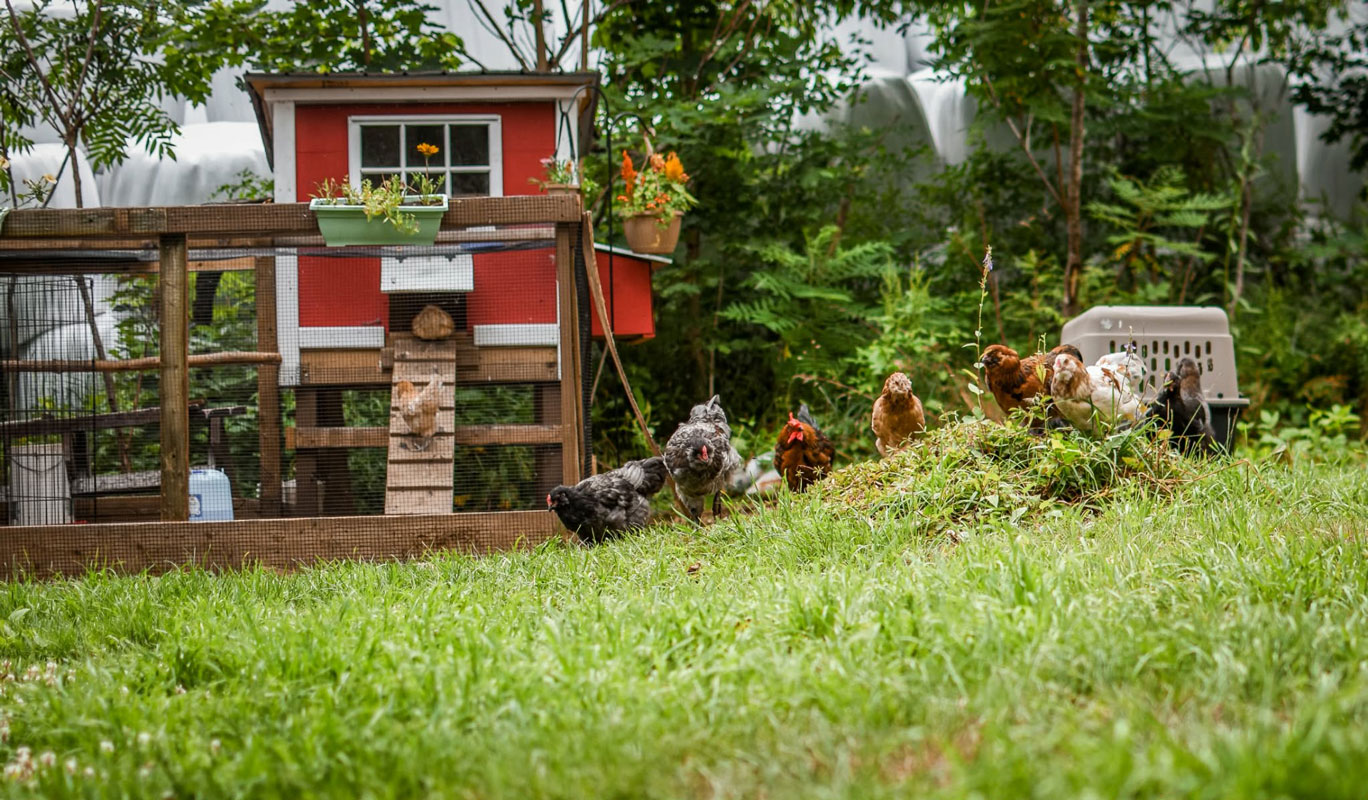
Lauren and her flock are located near the border of Annapolis and Queens counties in Nova Scotia.
If you’d like to follow along with what’s happening at Rustling Leaves Roost, see more of her chickens, or learn about the birds she has available, you can find her on Facebook at Rustling Leaves Roost.
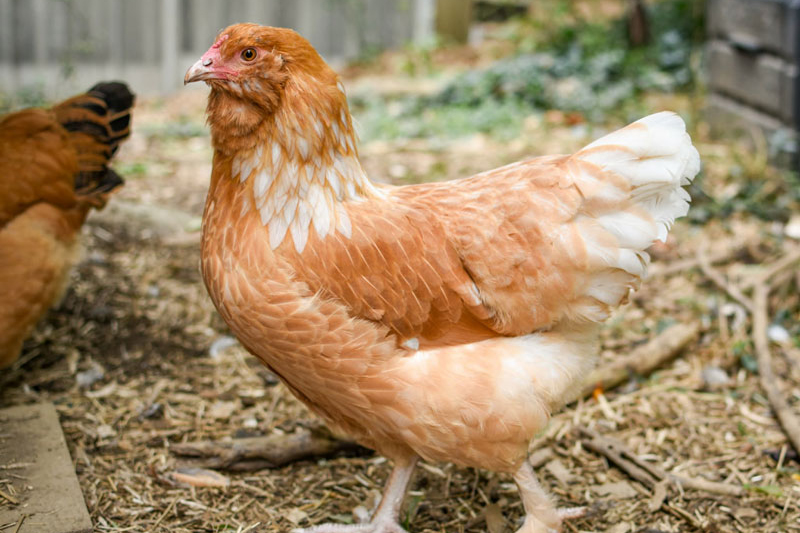
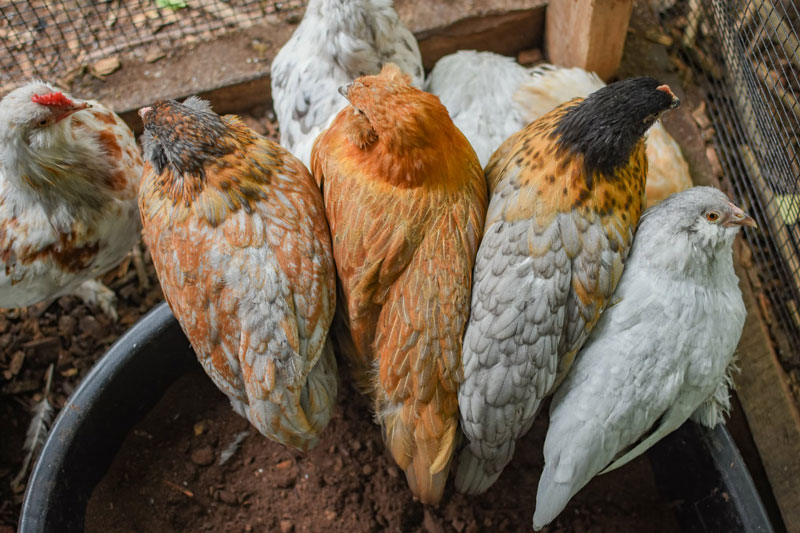
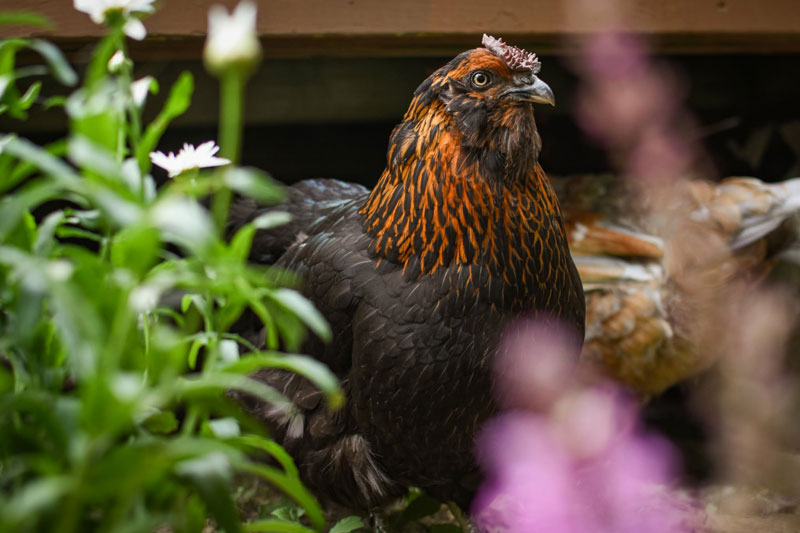
A big thank you to Lauren for being my very first Over the Fence guest and for taking the time to share her story with me!
I’d love to feature more poultry keepers in future issues of The Henhouse Post. If you’ve got a flock and wouldn’t mind chatting with me about it, I’d love to hear from you. You don’t need to be a breeder or have a big homestead. Everyone has a story to tell!
Around the Feeder
What’s happening in our chicken-keeping community.
The First Flock Party Was a Hit!
Back in September, I hosted the very first Flock Party, and I’m happy to report that it was a success!
The idea behind the Flock Party was pretty simple. I wanted to give local poultry keepers a chance to get together, have a coffee, and spend an afternoon talking chickens with people who wouldn’t get bored of the subject after five minutes. That’s pretty much exactly what happened!
Everyone grabbed some coffee and snacks, found a place to sit, and started chatting like they’d known each other for years. Phones came out to share pictures of favourite birds, people played impromptu games of “hen or roo” with photos, and conversations bounced between advice, funny stories, and the struggles that come with keeping poultry. There were even a few moments when people realized they already knew each other, or had connections they hadn’t realized. Nova Scotia really is a small place!
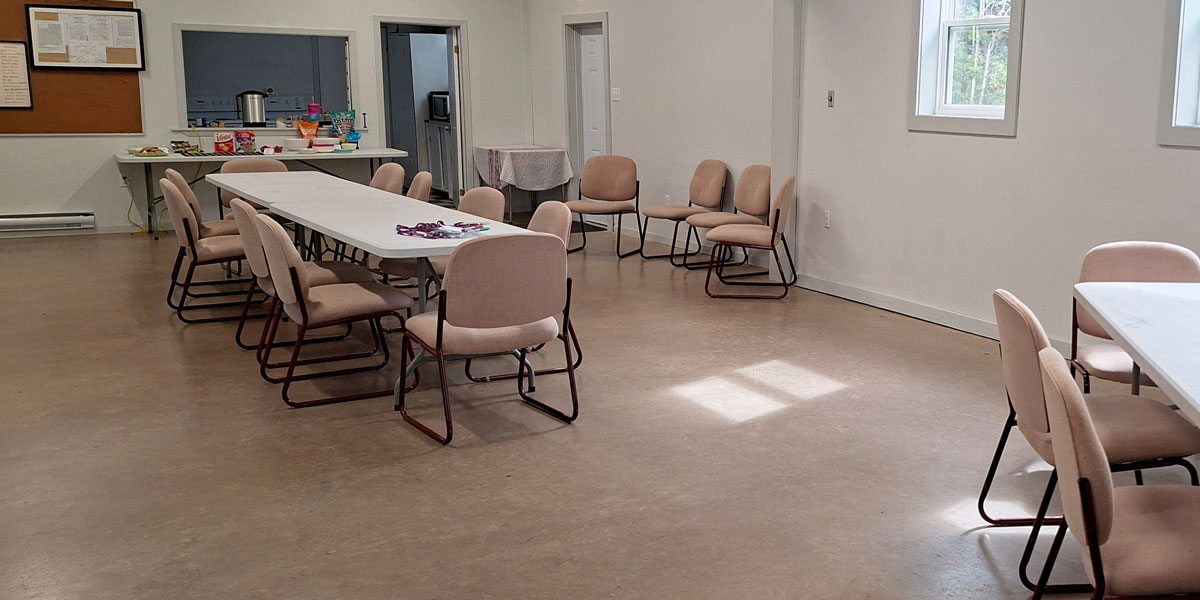
My favourite part was watching everyone connect so easily. There was no need to keep people entertained or come up with things for everyone to do. Once the conversations started, they just kept going. In fact, we were all so busy talking that nobody remembered to take any pictures! The only photo I have is of the empty room before everyone arrived. Apparently, we were having too much fun to document any of it!
Nearly everyone who came said they would be interested in getting together again so I’m already planning another Flock Party for spring 2027, and I’m looking forward to doing it all over again!
Looking Ahead to 2027
I’m also working on my poultry event calendar for next year. There will be more Feathered Fundamentals workshops, another couple of Flock Parties, and I’ll be attending a couple of poultry events as well. Dates and details are still being sorted out, but I’ll share them as things are confirmed.
If you’re organizing a poultry-related event in Nova Scotia, I’d love to hear about it, too! Around the Feeder isn’t just for my events. I’d like this section to become a place where readers can find out what’s happening in our poultry community.
Henquiries
Your chicken-keeping questions, answered.
How should I prepare my chicken coop for winter?
Getting your coop ready for winter isn’t about making it as warm as possible. It’s about keeping your chickens dry, protected from harsh weather, and properly ventilated.
Healthy chickens are generally equipped fairly well to handle cold temperatures, especially when they’ve had time to acclimate as the seasons change. Moisture, drafts, and poor ventilation are often much bigger concerns than the cold itself.
Ventilation is essential.
It might seem sensible to close every opening to keep the cold air out, but chickens produce a surprising amount of moisture through their breathing and droppings. Without adequate airflow, humidity and ammonia can build up inside the coop.
There’s an important difference between ventilation and drafts. Ventilation allows fresh air to enter and stale, humid air to escape. A draft is air blowing directly across your chickens, particularly while they’re roosting. You want the first without the second.
A commonly used rule of thumb is to provide approximately 1 square foot of ventilation for every 10 square feet of coop floor space. For example, a 40-square-foot coop would have about 4 square feet of ventilation openings. That’s a starting point, not an absolute rule, and more is actually probably better in the summer months. The number of birds, placement of the vents, and how well air actually moves through the coop all matter. What works for one coop design may not work for another, even if they’re sitting side by side in the same yard.
Keep ventilation openings above the birds’ roosting level where possible, and protect them from direct drafts. Remember that air needs a way to move through the coop. Having a vent doesn’t necessarily mean that the air is circulating properly. It’s not a bad idea to get inside the coop on a windy day and have someone close all of the doors so you can feel for yourself what areas might be an issue. Pay particular attention to where the birds sleep.
There are also a few warning signs to watch for once the cold weather arrives. Condensation on windows, frost forming on interior surfaces, persistently damp (or frozen) bedding, or a noticeable ammonia smell can all indicate that something needs attention. Increasing ventilation, removing wet bedding, and addressing the source of excess moisture are good places to start.
You may need to adjust your vents as the weather changes. My own coops have VERY open eaves with a lot of venting for our hot summer days and they’re too open for the colder, winter months. I compensate by closing some openings on the side that takes the worst of the winter wind. For me, leaving the vents open on just one side of the coop provides enough fresh air.
Keep the Bedding Dry
Check for leaks, spills, damp areas, and condensation. Add or replace bedding as needed, and pay particular attention to the areas beneath the roosts where droppings accumulate, as well as around the waterer.
Protect the run from wind and snow.
Covering some of the run walls with 6 mil vapor barrier can make a big difference in how comfortable the birds are outdoors. Just make sure you’re not eliminating necessary airflow. Leave a little space at the top so fresh air can still make its way in.
Secure it with strips of wood, sandwiching the vapor barrier between the run itself and the wood strip. I use screws to attach the strips, but an air nailer that will fire staples works well too. I like to use screws because I reuse my wood strips each year and using staples ends up destroying the wood when you remove them.
Tarps do not hold up as well in our climate, and neither do the thinner 4 mil vapor barrier or other types of plastic sheeting. It’s really worth it to splurge for the 6 mil vapor barrier. It withstands a surprising amount of wind and weather when it’s installed as I mentioned above and it makes a nice little greenhouse-like space without snow or wind for the birds to hang out in.
If you want to go the extra mile, you can add straw to the “floor” of the run for them too. I prefer the bagged chopped straw for this just because the shorter pieces make it easier to rake out poops and clean it. You pay for that convenience though, the bagged straw is more expensive than a regular bale.
Check your water setup.
Chickens need access to fresh, unfrozen water throughout the day. Whether you’re using heated waterers or changing water manually, it’s worth figuring out your winter routine before freezing temperatures arrive.
If you’re going to be manually filling water through the day, invest in some rubber feed bowls. If they freeze solid, you can just put them on the ground upside down and stomp on them. The ice will pop right out. Just be careful with the stomping if the temps have been in the negative double digits. A frozen rubber bowl at -20°C is A LOT harder than one that is frozen at -2°C. Ask my poor hip how I know this!
Inspect the coop itself.
Look for gaps, leaks, loose hardware, and anything that might become a problem once snow and ice arrive. It’s much nicer to discover a problem in November than during a January snowstorm!
Should you heat your chicken coop?
Ah, the great winter chicken-keeping debate!
Ask ten chicken keepers whether you should heat your coop and you’ll probably get eight answers that are variations of “absolutely not!”, one person who is undecided, and one who unapologetically provides heat. Most keepers wouldn’t dream of adding heat, while a small minority wouldn’t dream of leaving their chickens without it. There isn’t much middle ground and opinions are, well, heated.
Healthy, fully feathered adult chickens can tolerate quite cold temperatures when they’ve had time to acclimate and have a dry, well-ventilated shelter that is protected from drafts. Their feathers provide insulation, and they can fluff them up to trap warm air close to their bodies.
That doesn’t mean every chicken will handle winter equally well. Age, health, body condition, feather coverage, breed, and the severity of the weather all make a difference. A chicken going through a hard molt, for example, doesn’t have the same insulation as one with a full set of feathers.
Supplemental heat may be appropriate in certain circumstances, particularly for vulnerable birds or during unusually severe weather. It shouldn’t be treated as a substitute for proper housing, ventilation, and dry bedding.
Something worth understanding is that chickens don’t have to be in danger of freezing before cold temperatures begin affecting them. Below about 10°C, chickens need to start expending additional energy to maintain their body temperature. Being able to tolerate the cold doesn’t mean doing so requires no extra effort.
The biggest concern with heating a coop is fire. Chicken coops contain bedding, feathers, dust, and plenty of curious birds. Heat lamps are particularly concerning because they can become dangerously hot, and a fallen or improperly secured lamp can start a fire.
If you decide supplemental heat is necessary, choose equipment specifically designed and approved for poultry or livestock housing, follow the manufacturer’s installation instructions, dust it off DAILY, and make sure your electrical setup is suitable for the conditions. A properly installed radiant heating panel is generally a more sensible option than an exposed heat lamp, although no electrical heating system is completely without risk. If you do use a heat lamp, secure that thing at least three different ways so that it absolutely can’t fall or be knocked down!
I use supplemental heat here when I feel it’s necessary, and I’m not shy about admitting it (even if it is controversial). My goal is for my birds to thrive, not merely survive the winter. That doesn’t mean I’m trying to keep their coops at household temperatures. I’m talking about taking the edge off the cold when conditions warrant it, sometimes just keeping the temperature around freezing. I don’t see anything wrong with making winter a little more comfortable for them.
One argument I hear all the time against heating coops is that the chickens won’t be able to cope and will die if the power goes out. I don’t agree with that as a blanket statement. Here in Nova Scotia, temperatures can swing from -20°C to +10°C in a remarkably short period. Our chickens are already experiencing significant temperature changes due to our normal winter fluctuations that they tolerate without mass casualties.
There’s a big difference between keeping a coop at room temperature and providing a little supplemental heat during particularly cold weather, though. I don’t believe that keeping a coop around or just above freezing means the birds will suddenly be unable to handle colder temperatures if the power goes out. Of course, I’d still consider the needs of individual birds and have a plan for unusually severe conditions. You should do that whether you choose to provide heat or not.
I should also mention that I have smoke detectors in every coop where I use supplemental heat. They will sound inside our house if there are any issues. With multiple coops to look after, I want to know immediately if something goes wrong. It’s an extra precaution that gives me some peace of mind, although it certainly doesn’t eliminate the risk of fire.
My advice is to focus on the coop itself first. Keep it dry, provide appropriate ventilation, protect the birds from drafts, and pay attention to how they’re actually coping with the weather. Make decisions about supplemental heat based on the birds and their circumstances, rather than assuming every coop needs a heater or that no chicken should ever have one. The right choice for your flock might not be the right choice for someone else’s, and that’s ok!
Every coop and flock is different, so there’s no single winterizing method that works for everyone. The goal is to provide a dry, well-ventilated shelter where your birds can escape the worst of the weather and remain comfortable throughout the winter.
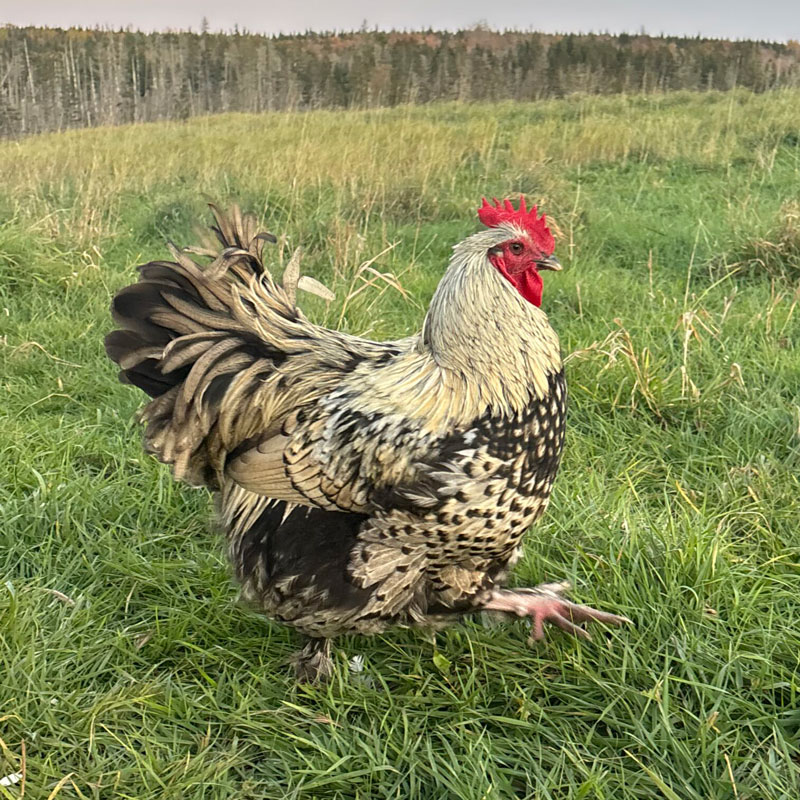
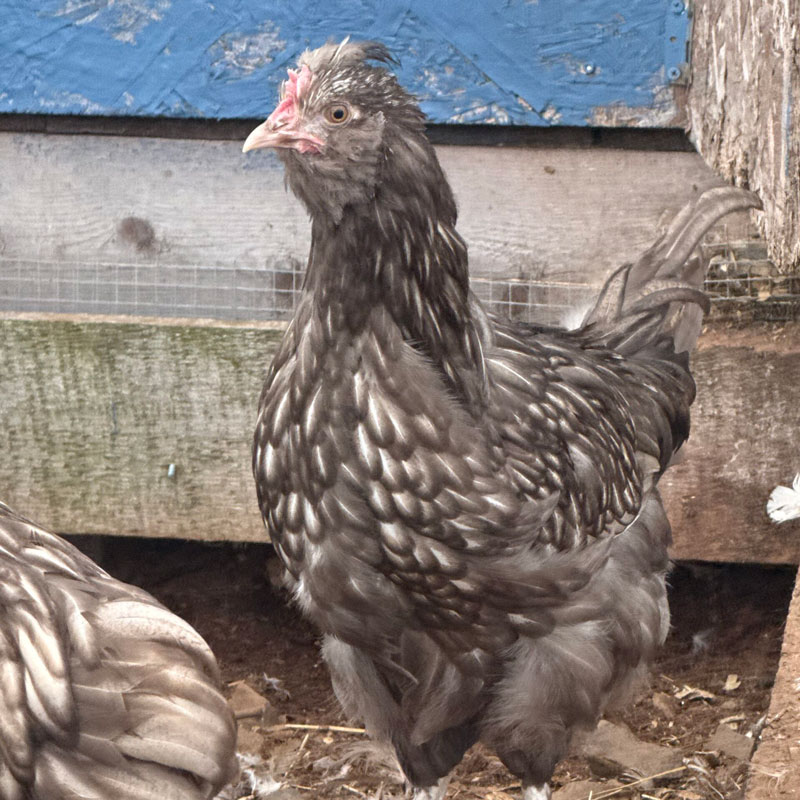
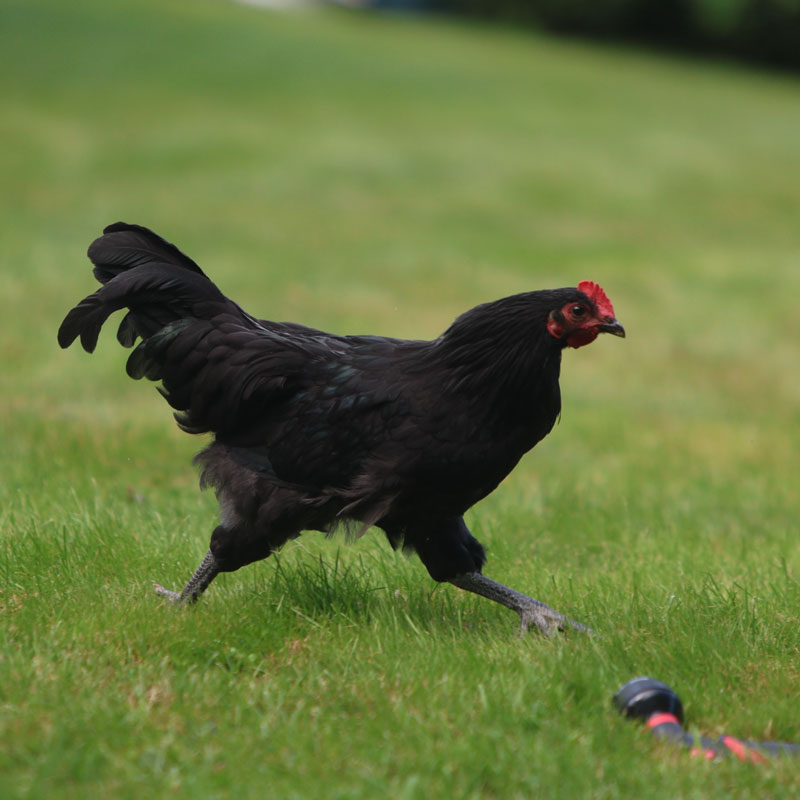
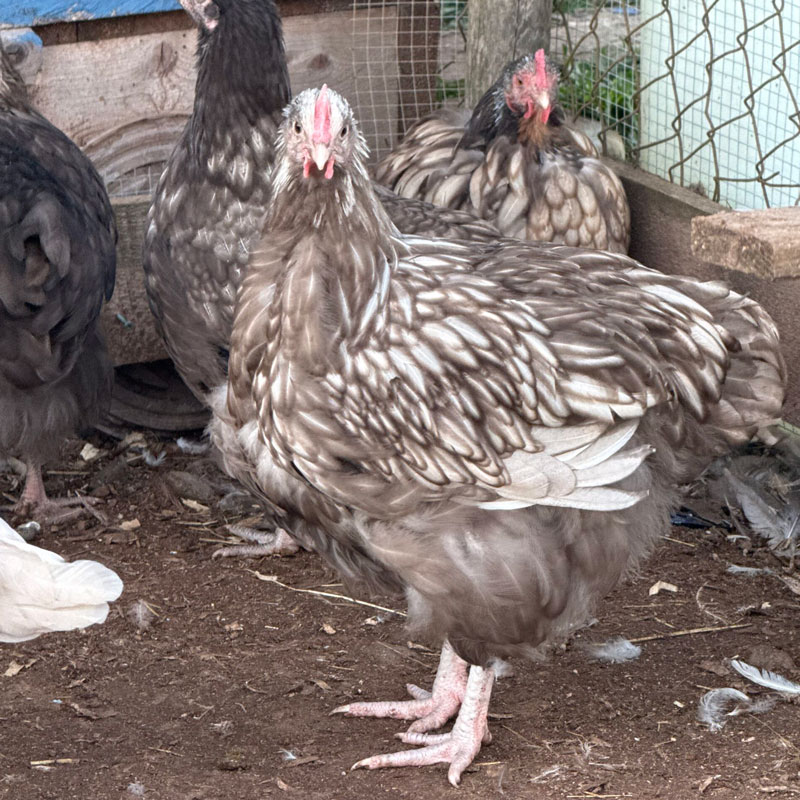
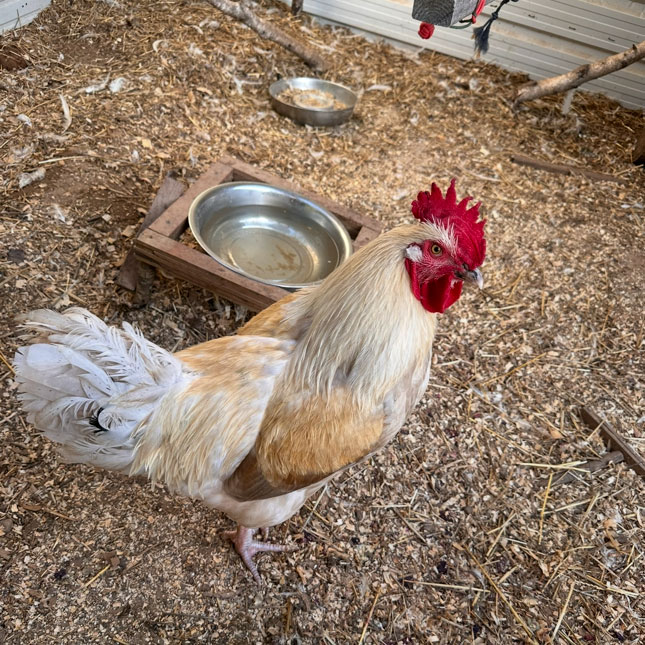
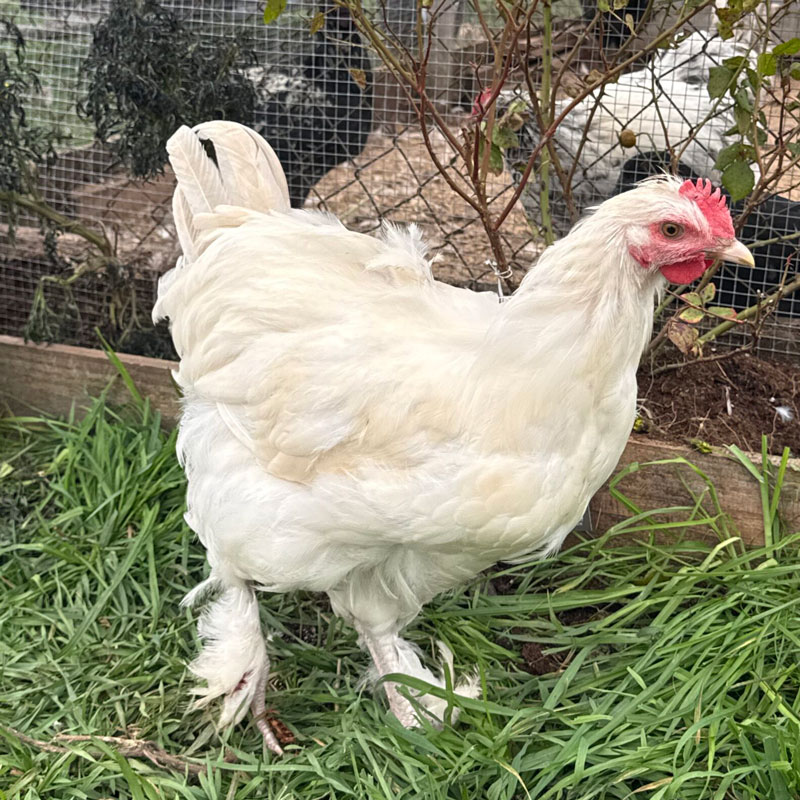
Eligible Bachelors
Meet some of The Rooster Registry’s boys looking for a flock to call home.